Good-Better-Best Quoting: How Tiered Proposals Win More HVAC Sales
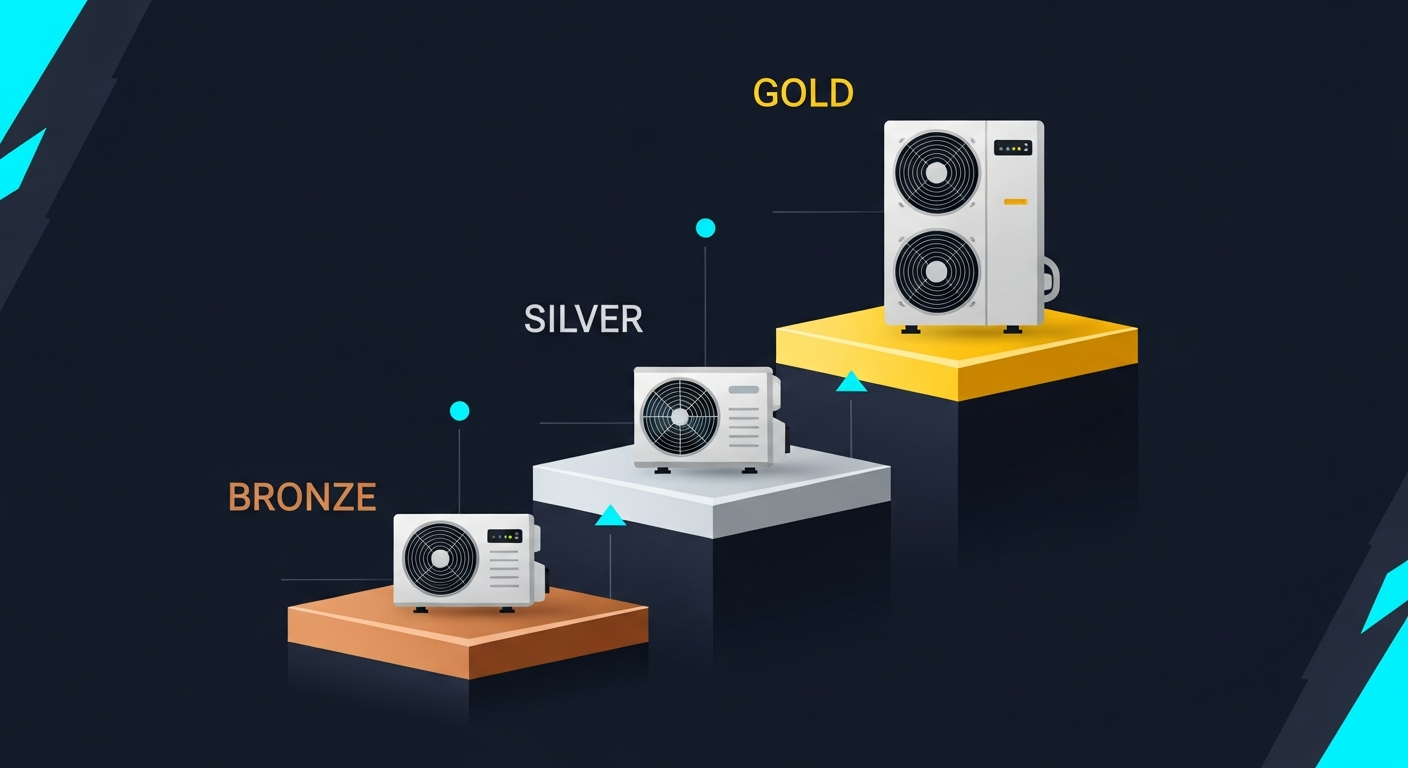
Why One Option Isn't Enough
Picture this: you're sitting at a homeowner's kitchen table. Their 15-year-old system just died, and they need a replacement. You hand them a single quote — one system, one price. They look at the number, thank you for coming out, and say they need to "think about it."
What happened? You gave them a take-it-or-leave-it decision. And when the only choice is yes or no, "no" wins more often than you'd like.
Now imagine presenting three options: a reliable budget-friendly system, a mid-range system with better efficiency and a longer warranty, and a premium system with top-tier performance. The conversation shifts from "should I buy?" to "which one should I buy?"
That's the power of tiered pricing, and it's one of the most effective sales strategies in the HVAC industry.
The Psychology Behind Three Options
The good-better-best approach isn't just a sales trick — it's grounded in consumer psychology.
The Decoy Effect: When presented with three options, the middle option almost always looks like the best value. The budget option feels too basic, and the premium feels like a stretch. The middle tier becomes the comfortable, confident choice.
Research shows that 50-60% of customers choose the middle option. About 20-30% choose premium. Only 15-25% choose budget. By offering three options instead of one, you're naturally steering customers toward a higher-value purchase.
Anchoring: The premium option sets an anchor point. When a homeowner sees the top-tier system at $14,000, the mid-range at $10,500 suddenly feels reasonable — even if they would have balked at $10,500 as a single bid.
Autonomy: People want to feel like they're making a choice, not being sold to. Three options give homeowners control. They're comparing your options against each other, not against your competitor's single bid.
What Goes Into Each Tier
Each tier should represent a genuine step up in value — not just a few dollars added to the same system.
Good (Silver Tier): Your entry-level option. A quality system from a reputable manufacturer — a standard-efficiency unit (14-15 SEER2) with a basic warranty. Its purpose is to establish a floor and make the better options look more attractive by comparison.
Better (Gold Tier): Your sweet spot. A higher-efficiency unit (16-17 SEER2), a better warranty (10-year parts and labor), and possibly an upgraded thermostat. Price this 25-40% above the Good option. This is where your margin is highest.
Best (Platinum Tier): The premium experience. Top-of-the-line equipment (18+ SEER2), the longest warranty, premium accessories (smart thermostat, UV air purifier, surge protector), and maybe a maintenance plan included.
The Numbers Tell the Story
Say your average single-quote proposal is $8,500 and you close 40% of your quotes.
With single-option quoting: 10 quotes × 40% close rate × $8,500 = $34,000 in revenue.
With tiered quoting, your close rate improves to 50-55% and your average ticket increases because most customers choose the middle or top tier: 10 quotes × 52% close rate × $10,200 average ticket = $53,040 in revenue.
That's a 56% increase from the same 10 leads — not because you're working harder, but because you're presenting options more effectively.
Why Most Contractors Don't Do This
If tiered pricing is so effective, why isn't every contractor doing it? Because it's a pain to build three quotes for every job manually. Tripling the work for every lead? Most contractors default to a single option and leave money on the table.
This is exactly the problem HVAC quoting software like QuoteSheet solves. You configure your tiers once — equipment packages, markup structure, and add-ons. Then for every job, the platform generates a complete good-better-best proposal in minutes.
- Select the job type and specifications (tonnage, system type, special requirements).
- The platform automatically builds three tiers based on your preconfigured packages and pricing rules.
- Review, adjust if needed, and send. The customer receives a professional proposal showing all three options side by side.
What used to take an hour now takes minutes, and every tier is accurately priced for profit.
Presenting Tiered Options Like a Pro
Start with the premium option. It sets the anchor and makes everything else feel more affordable.
Name your tiers thoughtfully. Silver, Gold, Platinum — or Comfort, Performance, Ultimate. The labels frame the customer's perception.
Highlight the Better tier. Mark it as "Most Popular" or "Recommended." This gives social proof and makes the decision easier.
Let the proposal do the talking. A clean, well-designed proposal with clear descriptions, transparent pricing, and monthly financing options builds trust.
Stop Leaving Revenue on the Table
If you're still sending single-option quotes, you're leaving 30-50% more revenue on the table with every proposal. Tiered pricing is a proven strategy that the most successful HVAC companies use every day.
With QuoteSheet, you can generate professional three-tier proposals quickly, ensuring every customer gets options and your average ticket keeps climbing.
Generate three-tier proposals in minutes — start your free trial →